CAL 1 Learning Objectives
Master the core principles and values of agile leadership. Understand your role in promoting them so you can think and lead with agility.
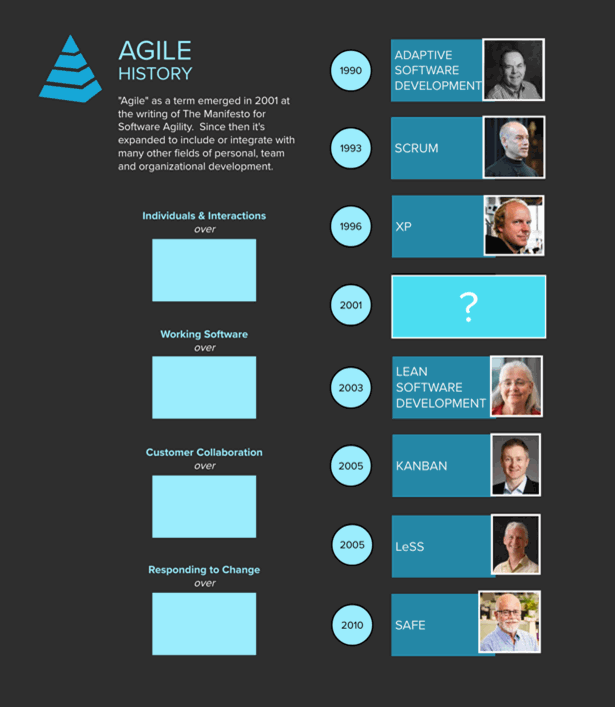
The Growth of Agile
Today’s markets are volatile, unpredictable, complex, and ambiguous (VUCA). Agile methods address these challenges by using tight, effective feedback loops to maximize learning, limit risk, and increase return on investment.
Why Agile Leadership
Agile methods were created to support adaptation without sacrificing quality in software development. However, delivering great products and services requires end-to-end agility - going beyond technology teams and into marketing, sales, operations, and beyond.
Agile leaders drive better collaboration and coordination across an organization, leading to higher product value, improved quality, faster delivery, and stronger employee engagement.
What Agile Leadership Entails
Agile leadership requires flexible approaches to planning, tracking, and managing work that align with diverse work portfolios. There is no one-size-fits-all method. Leaders must adapt based on their unique environment.
Effective feedback loops and a growth mindset are critical to driving agility at scale and sustaining long-term success.
Becoming an Agile Leader
The best agile leaders combine self-awareness, empathy, and a deep understanding of their business and customer environment. This enables them to apply situational leadership, adjusting their style to fit the context.
They drive lasting change by fostering self-organizing teams that take ownership, experiment, and continuously improve.